
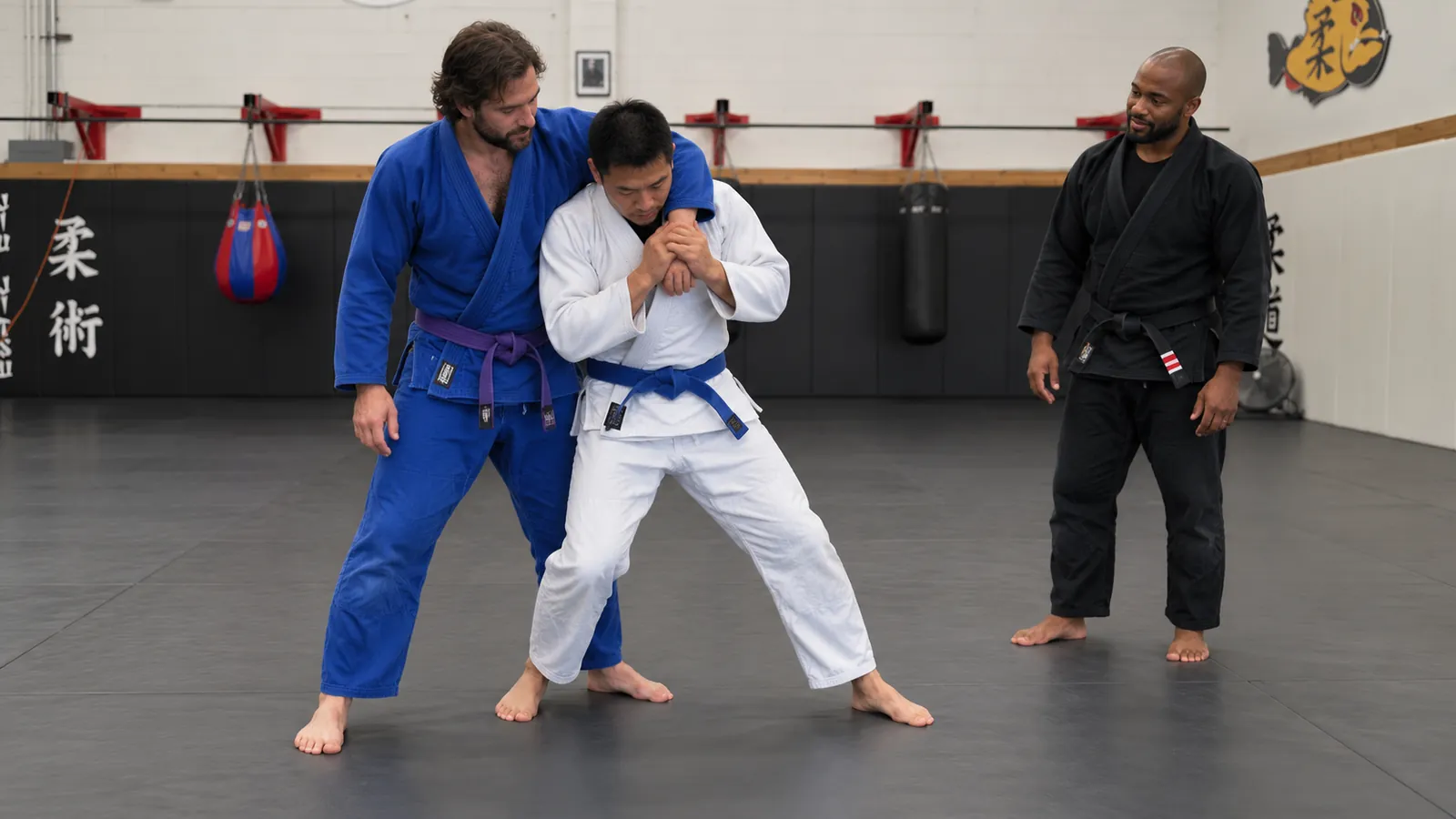
In our coaches' view, the best martial art for self-defence is the one you will train consistently against a partner who is genuinely resisting. For most adults, that means a grappling art such as Brazilian Jiu-Jitsu, wrestling or judo first, then striking such as boxing or Muay Thai. No art makes weapons or multiple attackers safe, and none replaces noticing trouble early and leaving.
What does self-defence actually need to cover?
In Statistics Canada's 2019 General Social Survey, 69% of the crimes Canadians described were not violent. Of the violent incidents outside spousal violence:
- 83% involved one attacker, and 10% two or more.
- 48% were committed by a stranger, and 42% by a friend, neighbour or acquaintance.
- 43% happened in a business or institution such as a bar or restaurant.
- A weapon was present in 25%, most often an object such as a bat, stick, rock or bottle, and a knife in 8%.
So outside spousal violence, the usual problem is one person, often a stranger, sometimes holding something. Self-defence must handle being grabbed, pushed and knocked down, and start earlier, because no art makes weapons or groups safe.
How do the main martial arts compare for self-defence?
No study we could find compares martial arts head to head for real-world self-defence. The nearest is a 2015 Dutch study of 66 police officers: those who also trained kickboxing, or karate or jiu-jitsu (the study does not name the style), two or three times a week, or Krav Maga once a week, performed arrest and self-defence skills better under high anxiety than officers with police training alone, though anxiety still lowered everyone's performance. The authors say their results cannot show which martial art is more effective.
The table compares what each art trains, not proven results. Ranges: distance (striking), clinch (standing grappling) and ground.
| Martial art | Live sparring | Ranges | Options besides striking | Competition injuries per 1,000 exposures | Time to basics (coaching judgement, not data) |
|---|---|---|---|---|---|
| Brazilian Jiu-Jitsu | Yes, no strikes | Clinch and ground | Holds, pins, escapes | 9.2 | Months |
| Wrestling | Yes, no strikes | Clinch and ground | Takedowns, pins | 9.0 to 30.7 | Months |
| Judo | Yes, no strikes | Clinch, some ground | Throws, pins | 25.3 to 130.6 | Months; falling comes first |
| Boxing | Yes, punches to the head | Distance | Footwork and evasion | Not compared | Weeks to months |
| Muay Thai | Yes, strikes to the head | Distance and clinch | Clinch | Not compared | Weeks to months |
| Krav Maga | Varies by school | All three, mostly in drills | Releases and escapes | Not compared | Weeks for drills; longer in sparring |
| Karate or taekwondo | Varies; point or controlled sparring | Distance | Blocks and distance | Taekwondo: 20.5 to 139.5 | Months |
| MMA | Yes, strikes to the head | All three | Takedowns, pins, holds | 236 to 286 | Longest to round out |
Injury figures come from a 2014 study that set BJJ tournaments against published studies of other combat sports; methods differed, and boxing, Muay Thai, karate and Krav Maga were not covered. Times assume two to three classes a week.
Live training has a cost: in a 2025 survey of 881 BJJ practitioners, 79% of training injuries happened during sparring.
Do 95% of fights really go to the ground?
Not according to the study the figure comes from. The claim, quoted as 90% or 95%, is usually traced to a Los Angeles Police Department review of 1988 use-of-force reports, and BJJ's early promoters get most of the blame for spreading it. In 2007, police use-of-force instructor Chris Leblanc quoted the study's findings: of 2,031 altercations, 95% followed one of five patterns, and 62% ended with officer and suspect on the ground. The study, he concluded, “does not show” that 90% of fights go to the ground.
Those officers were also trying to restrain someone, and Leblanc thought a citizen trying to escape is less likely to stay down. The lesson: fights often reach the ground, so learn to get back up.
Does BJJ work in a street fight?
For part of one. BJJ trains being grabbed, held, pushed over and pinned, against full resistance, so you learn in class what works on someone trying to stop you. No peer-reviewed study we could find has tested it on the street, and its limits are real:
- Strikes: BJJ sparring has no punches or kicks.
- Weapons: grappling with someone holding a knife is extremely dangerous.
- More than one attacker: pinning one person leaves you open to the next.
- Hard ground: concrete punishes falls in a way mats never do.
So add some striking in time, and make getting up and leaving the goal.
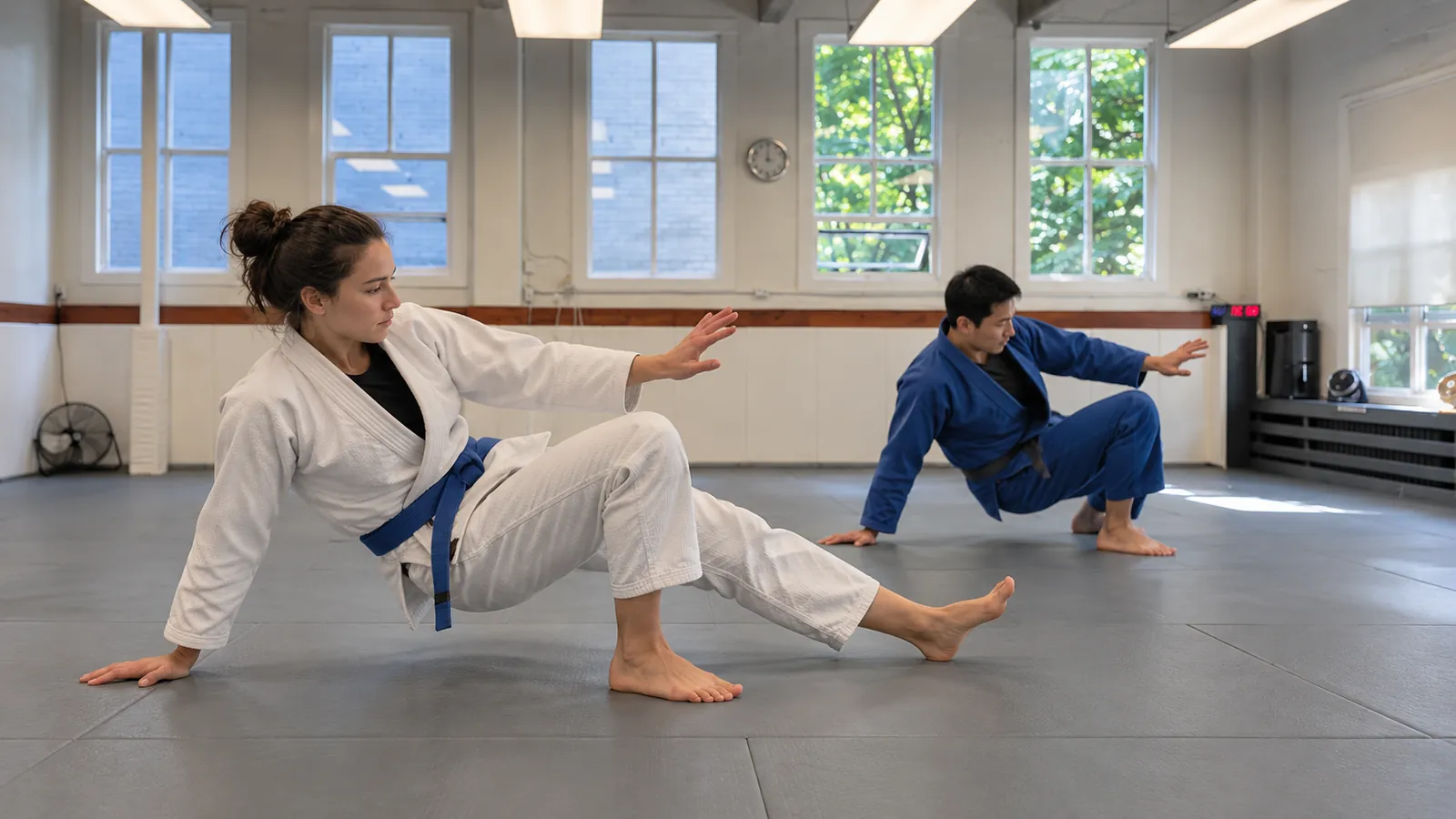
Is Krav Maga better than BJJ for self-defence?
Neither has been shown to be better: we found no study comparing them. Krav Maga is an Israeli self-defence system. In our coaches' view, it trains what BJJ mostly leaves out: weapons, several attackers and acting under stress. But some of its techniques are too dangerous to practise at full force, so they are drilled cooperatively, and how much free sparring schools add varies.
BJJ trains fewer situations, against full resistance. In the Dutch study, officers who trained Krav Maga once a week did better than officers without extra training on the tasks set only under high anxiety, such as reacting to a club attack or tackle they could not predict, but not on basic kicks, punches and blocks.
Boxing or BJJ: which is better for self-defence?
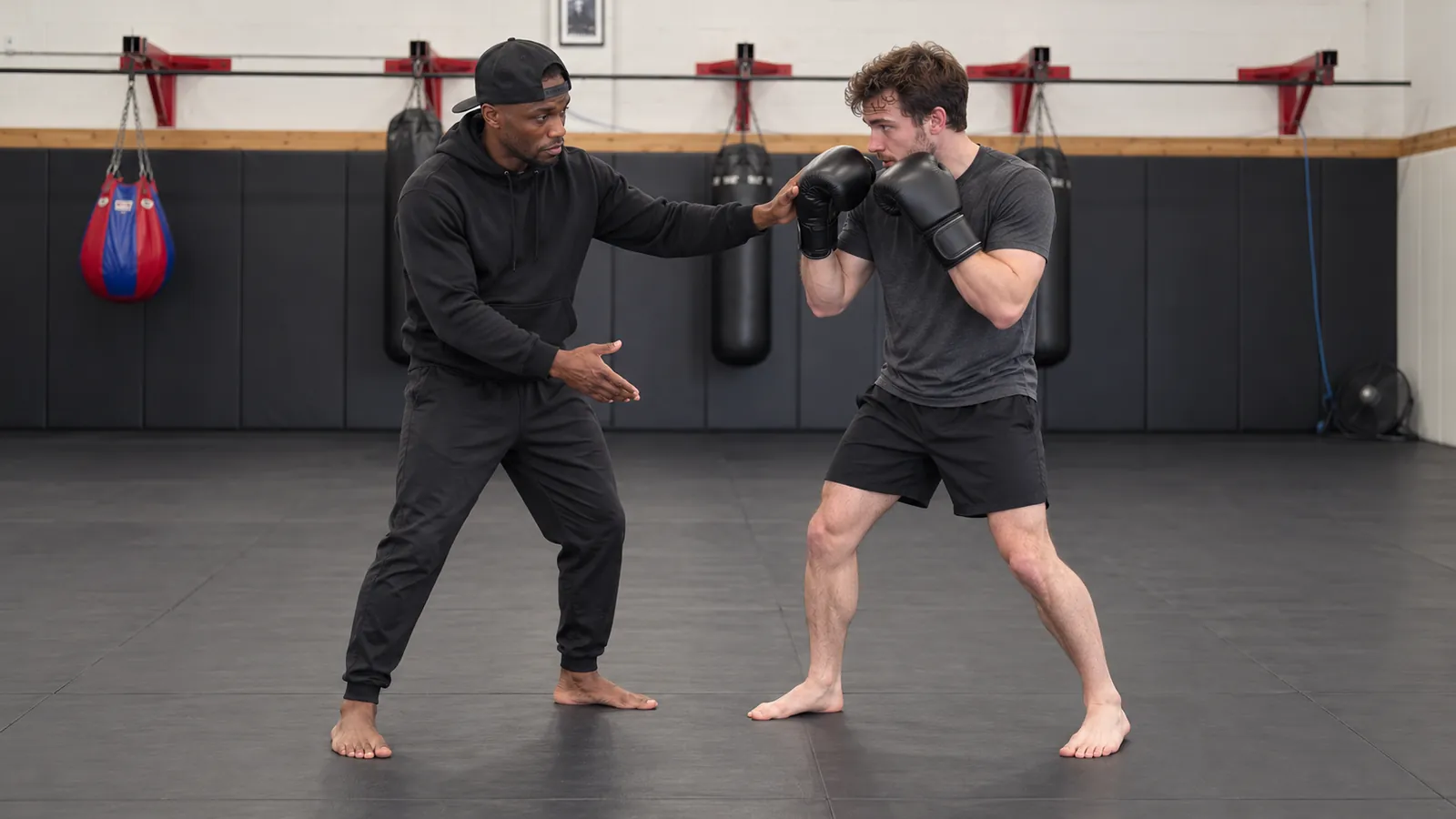
They cover different ranges. Boxing teaches footwork, distance, a solid guard and punches you can throw under pressure, tested in sparring, and in our coaches' experience its basics come relatively quickly. But it offers little once someone grabs you or you are on the ground, and sparring means punches to the head. Muay Thai adds kicks, knees, elbows and a strong clinch, with the same trade-off.
BJJ is the reverse: in our experience slower to learn, with no head strikes, and strongest where boxing stops. Many people learn grappling first, then add boxing, and our Langley academy also runs a Boxing Foundations class.
What about women and kids?
In the 2019 survey, women were violently victimised at nearly twice the rate of men (106 against 59 per 1,000), a gap driven entirely by sexual assault, and were more often targeted by someone they knew than by a stranger. Physical skill is only part of the answer, and our guide to the research on self-defence classes for women covers what has actually been tested. BJJ supplies the physical part, built around a smaller person handling a larger one, and every adult class at our three academies is open to women.
Children's self-defence raises different questions, starting with the school rather than the mat. Two guides cover them in more depth:
Is self-defence legal in Canada?
Yes, within limits. Section 34(1) of the Criminal Code says:
A person is not guilty of an offence if (a) they believe on reasonable grounds that force is being used against them or another person or that a threat of force is being made against them or another person; (b) the act that constitutes the offence is committed for the purpose of defending or protecting themselves or the other person from that use or threat of force; and (c) the act committed is reasonable in the circumstances.
In judging what is reasonable, the court must consider the circumstances, “including, but not limited to,” factors such as:
- “whether there were other means available to respond to the potential use of force”
- “the size, age, gender and physical capabilities of the parties to the incident”
- “the nature and proportionality of the person's response to the use or threat of force”
Training can give you more choices: leaving, or holding rather than only hitting. This is a summary of the law, not legal advice.
So which martial art should you learn first?
For most adults: a grappling art first, trained two to three times a week against real resistance, then some striking. In our coaches' experience, grappling is slower to learn than striking, but it covers being grabbed, pushed and taken down, and gives you ways to control someone without hitting them. We think wrestling and judo are as good a start as BJJ: wrestling is built around taking people down and stopping takedowns, and judo around throws and falling safely.
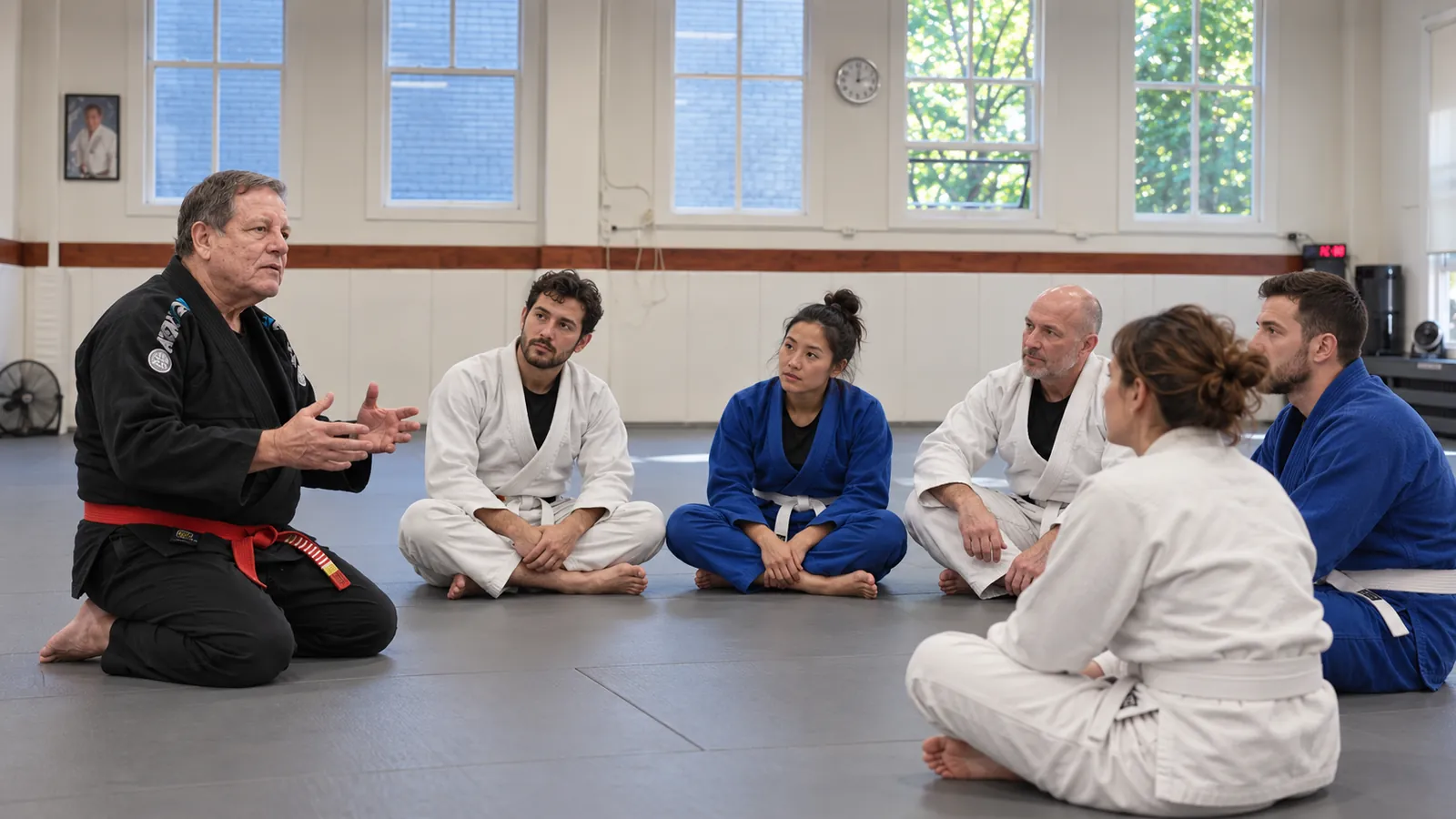
At any school, ask how often students spar against real resistance. And keep the one skill no class grades: noticing trouble early and leaving.
We do not run a separate self-defence course: at our academies, the self-defence is the jiu-jitsu. Beginners start in our Foundations class, taught at all three academies, and can begin with the $29 introductory two-week trial for new students.
Common questions
No study we could find compares martial arts head to head for real-world self-defence, so none is proven most effective. Our advice: choose one you will train consistently against a resisting partner, usually grappling such as BJJ, wrestling or judo first, then boxing or Muay Thai. No art makes weapons or multiple attackers safe.
Neither is proven better: we found no study comparing them. In our coaches' view, Krav Maga trains more scenarios, including weapons and several attackers, but some techniques are too dangerous to practise at full force. BJJ trains fewer situations against full resistance. In a Dutch police study, officers who trained Krav Maga once a week handled unpredictable attacks under high anxiety better than officers with no extra training, though the study was not designed to compare martial arts.
They cover different ranges. Boxing teaches footwork, distance and punching, and in our coaches' experience its basics come relatively quickly, but it offers little once someone grabs you or you are on the ground, and sparring means punches to the head. In our experience BJJ is slower to learn, has no head strikes and is strongest where boxing stops.
Many police altercations do, but not the 90% or 95% commonly claimed. The figure is usually traced to a Los Angeles Police Department review of 1988 use-of-force reports, in which 62% of altercations ended with both people on the ground. Those officers were trying to restrain someone, and Chris Leblanc, the police trainer who reviewed the study, thought a civilian trying to escape is less likely to stay down.
Yes, within limits. Under section 34 of the Criminal Code, a person is not guilty of an offence if they believe on reasonable grounds that force is being used or threatened against them or another person, act to defend or protect, and the act is “reasonable in the circumstances”. Courts weigh factors such as proportionality. This is not legal advice.
Want to try it on the mat?
Two weeks of unlimited classes for $29. No experience needed.
Sources
- Criminal Code of Canada, section 34: Defence of person
- Cotter A, “Criminal victimization in Canada, 2019”, Juristat, Statistics Canada, 2021
- Leblanc C, “Going to the Ground: Lessons from Law Enforcement”, Journal of Non-lethal Combatives, 2007
- Renden PG et al., “Police arrest and self-defence skills: performance under anxiety of officers with and without additional experience in martial arts”, Ergonomics, 2015
- Scoggin JF et al., “Assessment of Injuries During Brazilian Jiu-Jitsu Competition”, Orthopaedic Journal of Sports Medicine, 2014
- Stegerhoek PM et al., “Injury prevalence among Brazilian Jiu-Jitsu practitioners globally: a cross-sectional study in 881 participants”, BMJ Open Sport & Exercise Medicine, 2025