
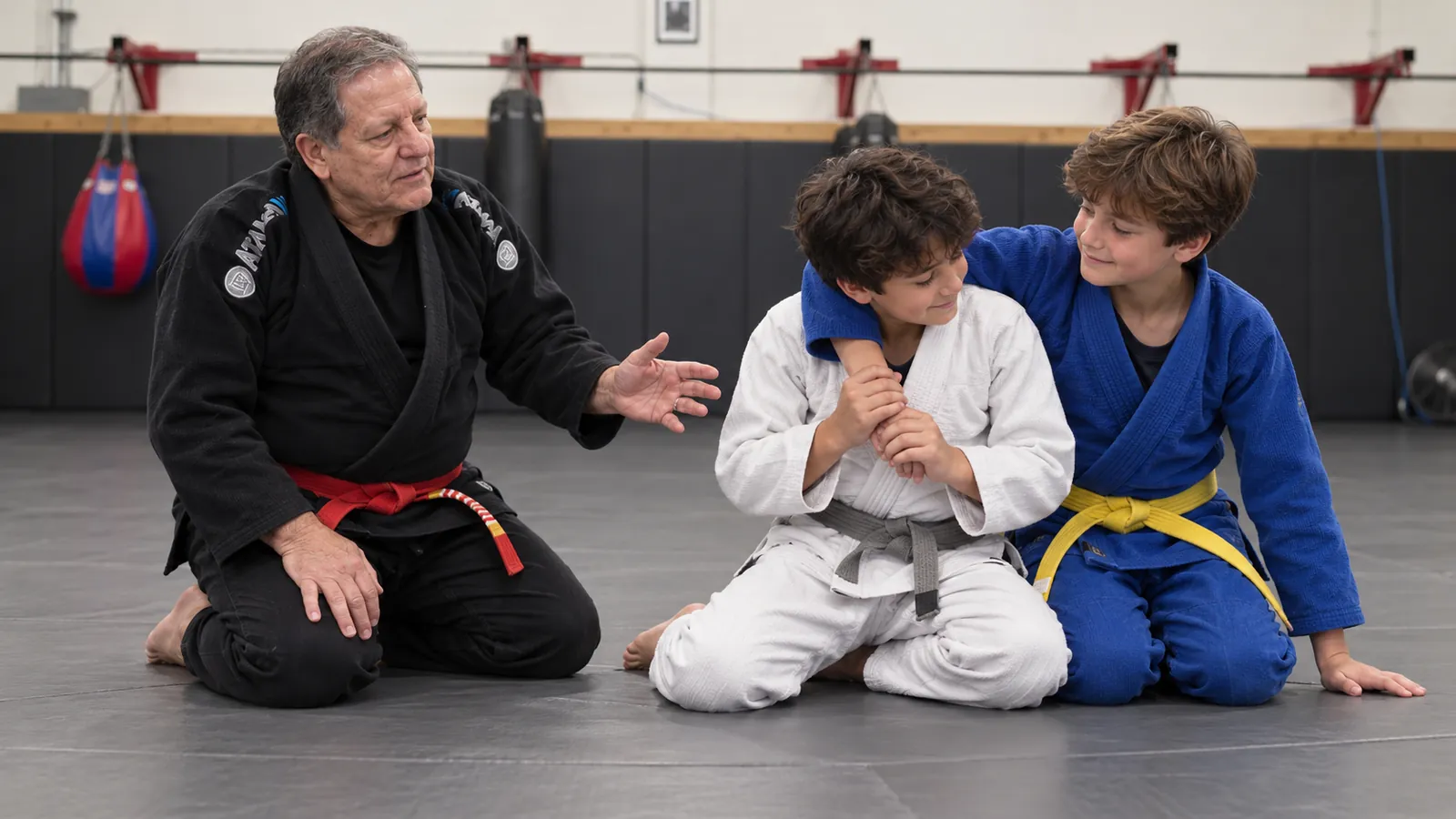
Yes, but only with part of the problem. A martial art can build a child's confidence and teach them to stay calm, get free and get away when they are pushed, grabbed or held down. It cannot stop the insults, rumours, exclusion and online bullying that make up most of what Canadian youth report, so the school comes first and the mat comes second.
What does bullying look like for young Canadians?
Mostly words, not fists. In the 2019 Canadian Health Survey on Children and Youth, 71% of 12- to 17-year-olds said they had experienced at least one form of bullying in the past year, and 42% of those were bullied monthly or more often. The most common forms were being made fun of, called names or insulted (59%), having rumours spread about them (34%) and being excluded from activities (32%). One in four (25%) had been cyberbullied, rising from 20% at age 12 to 27% at 17.
Statistics Canada's breakdown of the same survey for 15- to 17-year-olds shows that the physical forms are less common:
| Form of bullying | Share of 15- to 17-year-olds, past year |
|---|---|
| Made fun of, called names or insulted | 59% |
| Rumours spread about them | 35% |
| Excluded from activities | 32% |
| Pressured to do things | 19% |
| Threatened or insulted online or by text | 19% |
| Pushed, shoved, tripped or spat on | 17% |
| Threatened with harm | 17% |
| Excluded from an online community | 13% |
| Hurtful information posted online | 10% |
| Property destroyed | 10% |
Being pushed, shoved, tripped or spat on was reported by about one in six of these teenagers (17%). That is the part of bullying a martial art speaks to directly. It does nothing about a group chat.
What does the research say martial arts can and can't do?
The research is limited, and it does not all point the same way. These are the three studies most worth knowing:
| Study | Who took part | What it found |
|---|---|---|
| Harwood et al., 2017, meta-analysis | 12 studies, 507 young people aged 6 to 18 | A medium-sized drop in aggression (effect size 0.65) across nine intervention and longitudinal studies, with a wide margin of uncertainty |
| Moore et al., 2019, randomised trial | 283 Australian students aged 12 to 14, in a 10-week school program | A small effect: resilience and self-efficacy rose in the program group and fell in the control group; no significant effect on emotional or behaviour problems |
| Moore et al., 2024, the same trial | The same 283 students | The program neither reduced nor increased aggressive behaviour |
Three limits matter. The trial's program involved no aggressive physical contact. It was delivered by a psychologist and a taekwondo black belt, and it combined martial arts practice with group discussions on topics such as respect, resilience and bullying, so the effect of one cannot be separated from the other. Its 2019 results were the students' own ratings of themselves. And none of these studies reported whether children were actually bullied less; we could not find a randomised trial of martial arts alone that shows it.
Read together, the evidence supports a modest claim. Martial arts training can help a child feel more capable and better able to cope. It does not support a promise that the bullying will stop.
Will martial arts make my child more aggressive?
On balance, the research does not suggest it will. In the 2017 meta-analysis, aggression fell. In the trial's 2024 paper, the program neither reduced nor increased it, and the authors wrote that martial arts training “may have a limited effect on aggressive behaviour”, advising caution before using it to reduce aggression in adolescents.
So a martial art is unlikely to turn a gentle child into a fighter, but it is no treatment for a child who is already aggressive either. A lot depends on what the coaches expect, and on whether what is learned on the mat stays on the mat.
BJJ adds one useful habit. You let go the instant a partner taps, so children practise stopping the moment someone has had enough.
Should I teach my child to fight back?
No. Teach them to get free, get up, get away and tell an adult. BC's own guidance to students is to “be assertive but not aggressive”, tell the person to stop, and never retaliate: “Don't fight or plan any acts of revenge.” The same guidance tells parents of a bullied child to stress non-violent conflict resolution.
BJJ has no punching or kicking, which suits that order of priorities. It does include submissions, holds that make a training partner tap. Those belong on the mat, with a partner who can tap, never in a playground.
What should parents do first?
Start with the school, not the mat. The province's school-safety website, ERASE (expect respect and a safe education), sets out the steps:
- Listen carefully, then write down the details. Keep messages, photos and texts as evidence rather than deleting them, and block the sender.
- Get the school's code of conduct from its website, then book a meeting with your child's teacher, principal or counsellor. Ask what the school will do, and by when.
- Stay involved. Ask for updates, and if the bullying continues, take it to the school district, for example its safe school coordinator.
- Your child can also report bullying through ERASE's online Report It tool.
- If you think a crime has been committed, contact your local police.
- At home, role-play calm, confident responses together.
A martial art can sit alongside these steps. It is not a substitute for any of them.
Where does BJJ fit?
In the physical part, and in the confidence that comes from handling it. When bullying does turn physical, it can mean being pushed, grabbed, put in a headlock or held down by someone bigger, and those are the situations BJJ trains against a partner who is genuinely resisting:
- Escaping grabs, headlocks and holds
- Getting back to their feet safely from the ground
- Staying calm and thinking clearly under pressure
- Doing all of it without striking anyone
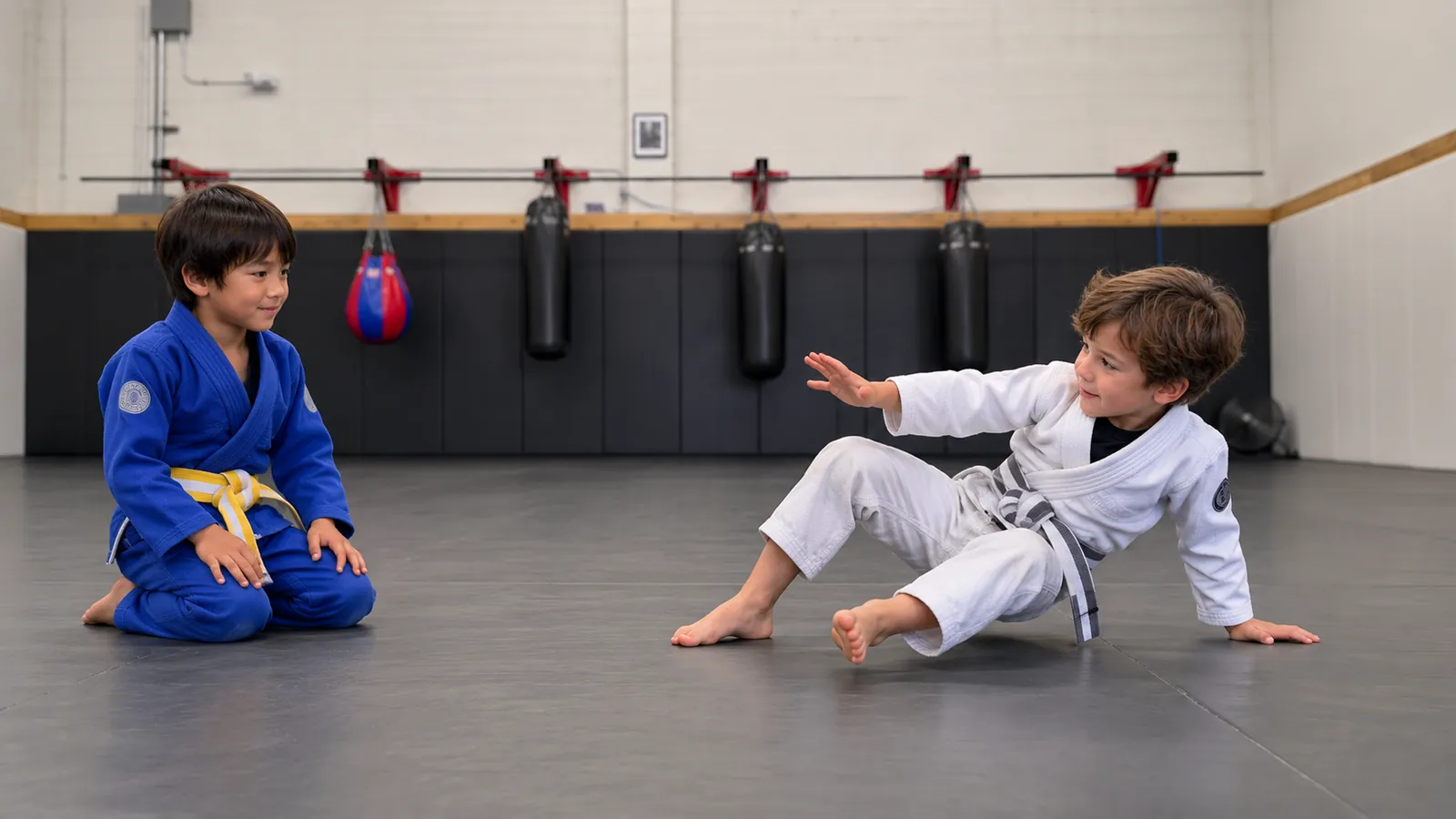
That is where the confidence comes from: not from being told they are brave, but from having got out from under a training partner many times, against someone who was really trying.
Our kids program is organised by age: Lil Tots for ages 4 and 5, Lil Champs for 6 to 8 and Champ Kids for 9 to 13. Kids classes run at our academies in Vancouver, Langley and Maple Ridge.
What should you look for in a kids class?
- How the coach talks about using jiu-jitsu outside class. The answer you want is about getting away and getting help.
- Control in live rounds. A coach should stop a round the moment it gets out of hand, and children should stop the instant a partner taps.
- Partners matched by age and size, so a six-year-old is not sparring with a twelve-year-old.
- How the coach treats a nervous newcomer.
- A class you have seen for yourself. Ask to watch one before you sign up, at any school you are considering.
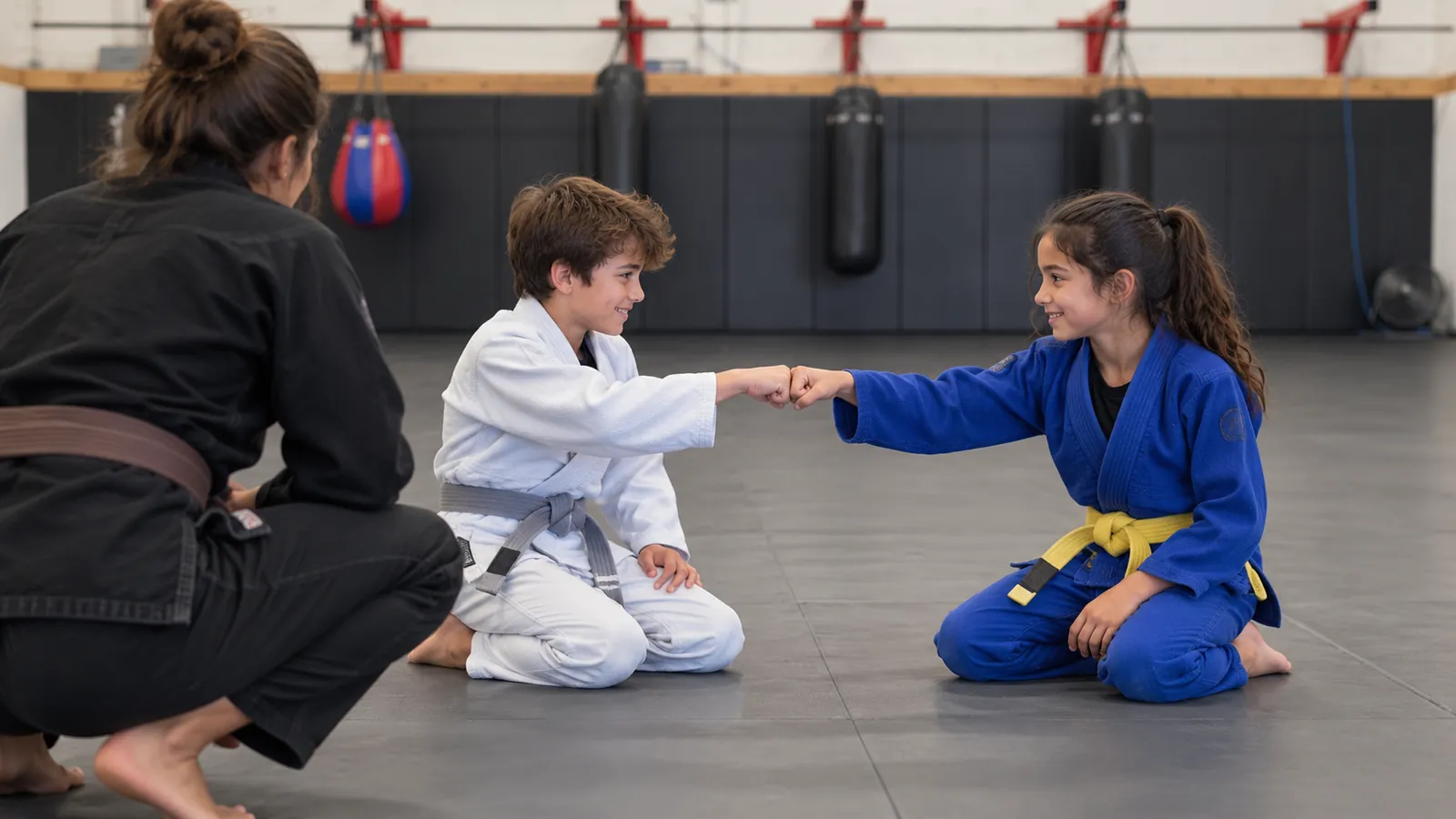
Then let your child try it. Children aged 6 to 13 can start with our $29 introductory two-week trial for new students; for Lil Tots, ask us and we will book a first class.
Common questions
It can help with part of it. In one randomised trial, a 10-week school program combining martial arts with group discussions slightly raised students' resilience and self-efficacy, and BJJ teaches a child to stay calm and get free if they are pushed, grabbed or held down. But most bullying of Canadian youth is verbal, social or online, and no randomised trial we could find shows that martial arts alone mean a child is bullied less.
For the physical side, we think a grappling art such as Brazilian Jiu-Jitsu is the strongest fit. When bullying turns physical it can mean being pushed, grabbed or held down, and BJJ trains those situations without any punching or kicking. No martial art fixes verbal or online bullying, so the school still comes first.
On balance, the research does not suggest it will. A 2017 meta-analysis found a medium-sized drop in aggression across the intervention and longitudinal studies it pooled, and a 2024 paper on a randomised trial of 283 students aged 12 to 14 found its 10-week program neither reduced nor increased aggression. So it is unlikely to make a child aggressive, but it is no cure for aggression either.
No. BC's anti-bullying guidance tells students to be assertive but not aggressive, and not to fight or plan revenge, and tells parents to stress non-violent conflict resolution. Teach your child to get free, get up, get away and tell an adult, and keep a written record of what happened.
From age 4. Our Lil Tots class is for ages 4 and 5, and from age 6 children move into Kids BJJ, split into Lil Champs for ages 6 to 8 and Champ Kids for ages 9 to 13. Students aged 14 and up train in our adult classes. Classes run at our academies in Vancouver, Langley and Maple Ridge.
Meet your child's teacher, principal or counsellor with a written record of what happened, and ask what the school will do and by when. If the bullying continues, take it to the school district, for example its safe school coordinator. Students can also report bullying through the province's ERASE Report It tool, and if you think a crime has been committed, contact your local police.
Want to try it on the mat?
Two weeks of unlimited classes for $29. No experience needed.
Sources
- Statistics Canada, “Pink Shirt Day (Anti-Bullying Day)”, StatsCAN Plus, 2023
- Statistics Canada, “Bullying victimization among sexually and gender diverse youth in Canada”, Insights on Canadian Society, 2022
- Harwood A et al., “Reducing aggression with martial arts: A meta-analysis of child and youth studies”, Aggression and Violent Behavior, 2017
- Moore B et al., “Developing Wellbeing Through a Randomised Controlled Trial of a Martial Arts Based Intervention: An Alternative to the Anti-Bullying Approach”, International Journal of Environmental Research and Public Health, 2019
- Moore B et al., “Martial arts and school violence: Examining the potential of martial arts training to reduce or foster aggressive behaviour in schools”, International Journal of Educational Research Open, 2024
- Government of British Columbia, “Bullying”, ERASE (expect respect & a safe education), 2025